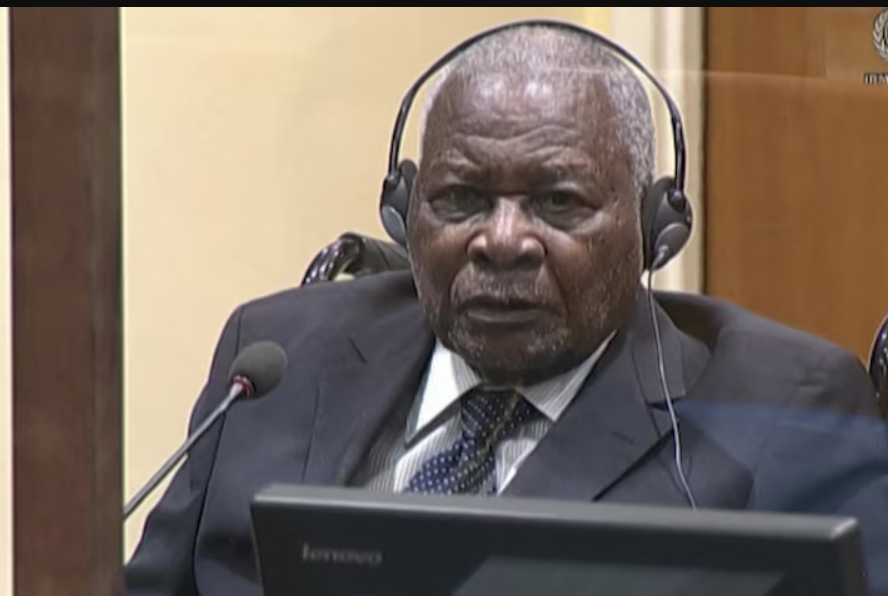
For many Africans who grew up hearing whispers about the Rwanda genocide, one name always seemed to float somewhere between fear, mystery, and political silence: Félix Kabuga.
To international investigators, he was one of the alleged financiers of the 1994 Rwanda genocide. To conspiracy theorists, he became the ghost billionaire who somehow vanished into East Africa while the world searched for him. And to many Kenyans, especially those who followed political stories in the late 1990s and early 2000s, Kabuga’s alleged presence in Nairobi became one of those stories that sounded too unbelievable to be completely false.
Now that Félix Kabuga is dead, the conversation has returned — not just about genocide, but about power, propaganda, corruption, and how wealthy people can sometimes disappear in plain sight.
This article explores the Rwanda genocide, Kabuga’s alleged years in Kenya, the role of media manipulation, and why this story still fascinates East Africans decades later.
Who Was Félix Kabuga and Why Was He So Feared?
Félix Kabuga was not a soldier. He was not a battlefield commander. He was a businessman.
And that is exactly what made him terrifying to many observers.
History has shown repeatedly that wars are rarely sustained by angry crowds alone. Behind most conflicts are financiers, political strategists, businessmen, media operators, and elite networks quietly fueling chaos while ordinary citizens fight and die.
Kabuga was accused of being one of those men during the Rwanda genocide.
Investigators linked him to extremist Hutu media outlets accused of spreading anti-Tutsi propaganda before and during the killings. One of the most infamous tools was radio broadcasting. At the time, radio was more powerful than social media is today in rural East Africa. A radio station could shape emotions, spread panic, and direct violence almost instantly.
That is the frightening part about propaganda: once fear becomes emotional enough, people stop thinking critically.
And honestly, Africa has seen this pattern too many times.
The Rwanda Genocide Was Not “Sudden”
The genocide in Rwanda officially exploded after the plane carrying Rwanda’s president was shot down in April 1994.
But when you study the timeline carefully, it becomes difficult to believe the violence was entirely spontaneous.
Within hours of the crash, roadblocks appeared. Names were already known. Militias were organized. Killings began with terrifying speed.
That level of coordination does not happen overnight.
Many analysts have argued that extremist structures had already prepared psychologically and logistically for mass violence long before the plane incident occurred. The assassination simply became the spark.
What followed remains one of the darkest chapters in African history, with an estimated 800,000 people killed in roughly 100 days.
Even decades later, the scale still feels difficult to process.
The Dangerous Genius of Coded Language
One detail many outsiders misunderstand about the Rwanda genocide is how propaganda actually worked.
People often ask: “How could neighbors suddenly turn against each other?”
But hatred rarely arrives screaming. It usually arrives disguised as humor, gossip, coded language, tribal fear, or political “self-defense.”
In Rwanda, most citizens spoke Kinyarwanda. Yet extremist messaging still managed to hide violent intentions inside coded phrases understood by insiders.
That idea may sound strange until you remember that every community has hidden language.
Families have codes. Politicians have codes. Criminal groups have codes. Even close friends communicate in ways outsiders do not fully understand.
That is why propaganda can become so effective. Dangerous ideas are often introduced slowly enough that they stop sounding dangerous.
Sometimes genocide begins with jokes.
The Nairobi Rumors That Refused to Die
For years, East African political circles were filled with rumors that Kabuga had quietly lived in Nairobi after the genocide.
The most repeated story involved an alleged sighting in Kawangware, where a man believed to be Kabuga was reportedly photographed while handling supplies at a market.
The image allegedly spread internationally, creating a surreal possibility: one of the world’s most wanted men casually moving around Nairobi.
Whether every detail of the story is true remains difficult to verify fully. But the persistence of the rumors reveals something deeper about Kenya’s political culture during that era.
Many people genuinely believed powerful individuals could hide almost anyone if enough money and political protection existed.
And to be fair, Africa’s history gives people reasons to think that way.
Did Political Connections Protect Him?
This is where the story becomes politically explosive.
For years, there were allegations that Kabuga had links to influential figures connected to the old KANU establishment under former President Daniel arap Moi.
Some reports and commentaries suggested he may even have stayed in wealthy Nairobi neighborhoods such as Karen while remaining beyond the reach of investigators.
No court ever conclusively proved the broader conspiracy theories surrounding political protection in Kenya. Still, the allegations survived for decades because they aligned with something many Africans already suspect:
Power often protects itself.
Not always. But often enough to damage public trust permanently.
The Informant Story Sounds Like a Movie — Which Is Why People Still Discuss It
One of the most dramatic stories tied to Kabuga involves a Kenyan man allegedly attempting to help foreign investigators locate him.
According to the account, the man reportedly became close to Kabuga and later began cooperating with American intelligence-linked investigators. In return, he allegedly expected relocation and protection abroad.
Then came the twist.
The man reportedly disappeared and was later found dead under suspicious circumstances.
To this day, the story remains surrounded by uncertainty, speculation, and unanswered questions. Some dismiss it entirely. Others believe it reveals how dangerous international fugitives become when betrayal enters the picture.
What makes the story linger is not just the mystery — it is the psychology.
People are fascinated by hidden networks, secret deals, intelligence operations, and powerful fugitives because such stories expose how different the world of elites can be from ordinary life.
Why Félix Kabuga’s Story Still Matters Today
Many younger Africans know about the Rwanda genocide only through documentaries, school summaries, or YouTube discussions.
But Kabuga’s story still matters because it raises uncomfortable questions modern societies continue to face:
- How dangerous can media propaganda become?
- How easily can fear manipulate ordinary people?
- Can wealth buy silence and protection?
- How many fugitives survive because of political relationships?
- And how fragile is peace in ethnically divided societies?
These questions are not just about Rwanda.
They are global questions.
Even today, social media algorithms reward outrage faster than truth. Tribal politics still exists. Politicians still weaponize fear. And misinformation still spreads faster than careful thinking.
Technology changes. Human psychology barely does.
The Strange Ending to a Long Manhunt
After decades on the run, Kabuga was finally arrested in France in 2020.
By then, he was an old man battling serious health complications, including dementia. International judges eventually ruled that he was no longer medically fit for a full traditional trial.
There is something strangely unsatisfying about that ending.
One of the world’s most hunted men did not end with dramatic courtroom confessions or cinematic revelations. Instead, the story faded slowly into legal procedures, health reports, and old age.
Real life rarely ends like Netflix documentaries.
Sometimes history’s darkest figures simply become elderly men in hospital rooms while the world debates what justice should have looked like decades earlier.
The story of Félix Kabuga is larger than one man.
It is a story about propaganda, tribal fear, political influence, money, silence, and the uncomfortable reality that some of history’s worst crimes are often organized far away from the actual bloodshed.
Whether discussing the Rwanda genocide itself or the long-running Nairobi hiding rumors, the fascination remains because the story touches something people instinctively understand:
Power can disappear people.
Money can reshape truth.
And propaganda can turn ordinary societies into dangerous places faster than most people realize.