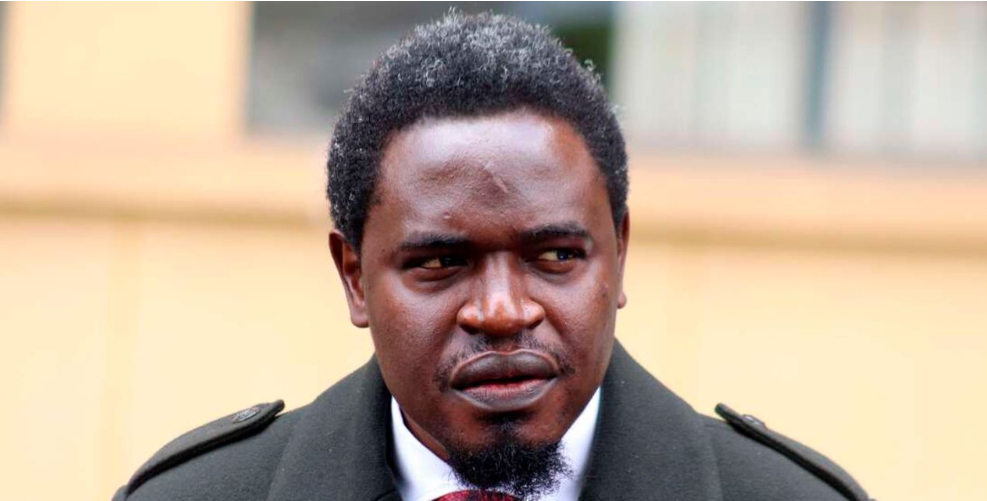
Few Kenyan lawyers have mastered public visibility the way Nelson Havi has.
To some people, he is the fearless constitutional warrior who challenged political power when others stayed silent. To others, he represents a modern Kenyan contradiction: a man whose public branding often appears cleaner than the controversies orbiting his private life.
Over the last few years, conversations around Havi have moved far beyond courtrooms. The debates now involve leadership style, personal branding, online allegations, masculinity, public morality, and even the psychology of political image management in Kenya.
And honestly? That might be the most fascinating part of the entire story.
Because this is no longer just about one lawyer.
It is about how powerful public figures manufacture identity in the social media age — and how quickly that image can crack once the internet smells inconsistency.
Why Nelson Havi Became One of Kenya’s Most Polarizing Lawyers
If you study modern Kenyan public figures carefully, you notice a pattern:
The louder someone positions themselves as morally fearless, the more aggressively the public investigates their private life.
Havi built his reputation during some of Kenya’s most emotionally charged constitutional debates, especially around the Building Bridges Initiative (BBI). His courtroom confidence, sharp language, and anti-establishment posture made him highly appealing to young Kenyans frustrated with political elites.
He did not brand himself as an ordinary lawyer.
He branded himself as the sovereign.
That matters.
Titles like that are not accidental. They create mythology. They turn professionals into symbols.
And once someone becomes a symbol, people stop analyzing them like human beings. They begin analyzing them like institutions.
That is why every controversy involving Havi instantly becomes national discussion material.
The “Family Man” Image and Why Kenyans Notice Timing
One detail many people overlooked at the time was the carefully polished family image presented during his peak public visibility.
In 2021, Havi and his wife appeared in a lifestyle feature discussing marriage, parenting, and family values. On the surface, it looked harmless — just another successful professional presenting his personal life to the public.
But Kenyan audiences are extremely media-aware today.
People now understand that public image campaigns are rarely random.
When politicians, lawyers, musicians, or influencers suddenly showcase perfect domestic stability during turbulent public moments, audiences immediately start connecting dots.
Fairly or unfairly, many interpreted the feature as strategic reputation reinforcement.
And to be honest, Kenyan public culture has trained people to think this way.
We have seen too many “perfect family” photos collapse under scandal two weeks later.
At this point, Kenyans treat glossy magazine interviews the same way they treat campaign promises: politely, but cautiously.
The Mercy Wambua Incident Changed the Tone Completely
The biggest shift in public perception came during the conflict involving Mercy Wambua at the Law Society of Kenya.
This was no longer ordinary political disagreement.
This was visual controversy.
And visual controversy is dangerous because people remember images longer than explanations.
Photos and reports connected to the dispute circulated widely online after allegations emerged that a boardroom confrontation had become physical during disagreements over governance and recordings.
Suddenly, the polished constitutional defender image collided with a completely different public narrative: aggression, control, and internal power struggles.
Now here is where things become psychologically interesting.
Many public figures survive scandals.
But scandals become more damaging when they contradict the exact values someone publicly markets.
If a chaotic celebrity behaves chaotically, people shrug.
But if someone brands themselves as disciplined, ethical, and morally superior, every contradiction becomes magnified.
That is exactly what happened here.
Even though Havi denied wrongdoing and later secured court victories connected to aspects of the conflict, public perception had already shifted emotionally.
And once emotional doubt enters public imagination, facts alone rarely erase it completely.
The Kilimani Allegations and Kenya’s Addiction to Double Lives
Then came the social media allegations.
And Kenyan social media did what Kenyan social media always does: it transformed private accusations into national entertainment within hours.
Among the names repeatedly mentioned online was Jerry Thon, whose allegations pushed the conversation from governance into personal territory.
The internet became obsessed with claims involving alleged romantic relationships, hidden arrangements, and the now-famous “Kilimani SQ” narrative.
Why did this story spread so aggressively?
Because Kenyans are deeply fascinated by double lives.
Especially when the person involved publicly performs morality, discipline, or intellectual superiority.
The idea that a respected public intellectual could allegedly maintain a secret parallel lifestyle felt almost cinematic to online audiences.
It sounded like Nairobi politics mixed with a Netflix drama and a WhatsApp voice note.
But there is another layer here people rarely discuss.
Whether true or false, such allegations succeed online because modern audiences already distrust polished public branding.
People assume there is always a backstage version of every public figure.
So when scandal appears, audiences do not ask:
“Could this be true?”
They ask:
“How long has this been happening?”
That difference matters.
Nelson Havi and the Art of Political Branding in Kenya
One thing even critics admit about Havi is this:
He understands attention.
Very well.
His communication style blends intellectual aggression, anti-elite rhetoric, courtroom confidence, and carefully calculated symbolism. He speaks in ways designed to dominate headlines and social media clips.
And in fairness, it works.
In today’s Kenya, visibility is power.
The public rarely rewards quiet competence anymore. It rewards performance, confrontation, and identity politics.
Havi mastered that ecosystem early.
The challenge, however, is that highly performative public branding creates equally performative backlash.
The stronger the public image, the stronger the collapse when contradictions appear.
That is why controversies around him feel unusually emotional online. People are not just reacting to events.
They are reacting to broken expectations.
What the Nelson Havi Story Really Says About Kenya
This story is ultimately bigger than one lawyer.
It reveals how modern Kenyan society evaluates power, masculinity, morality, and authenticity.
We live in an era where public figures are expected to simultaneously be:
- brilliant,
- morally upright,
- family-oriented,
- politically fearless,
- emotionally disciplined,
- and socially relatable.
That is almost impossible.
So eventually, the performance cracks somewhere.
And when it does, social media turns into a courtroom of its own.
Ironically, the same internet that builds powerful personalities is now the same internet that aggressively dismantles them.
Why the “Watermelon Politics” Label Resonated
One phrase that kept appearing in discussions was “watermelon politics” — green on the outside, something else inside.
The phrase resonated because many Kenyans increasingly believe public branding in this country is theatrical.
People no longer trust appearances automatically.
They question:
- carefully staged interviews,
- family photo shoots,
- motivational speeches,
- political morality,
- and even activism itself.
The skepticism is no longer limited to politicians.
Lawyers, influencers, pastors, celebrities, and activists now face the same level of suspicion.
And maybe that skepticism says as much about Kenya’s political culture as it does about Nelson Havi himself.
Whether one views Nelson Havi as a courageous legal mind or a highly skilled image strategist depends largely on how they interpret public power in Kenya.
Supporters see a lawyer constantly targeted because he challenges influential systems.
Critics see a man whose personal controversies repeatedly undermine the moral image he projects publicly.
The truth is probably more complicated than either side wants to admit.
But one thing is undeniable:
In modern Kenya, reputation is no longer controlled in courtrooms alone.
It is negotiated daily through timelines, screenshots, viral narratives, podcasts, blogs, and public perception.
And once the internet begins questioning the gap between image and reality, the conversation rarely stays private for long.